
The 2026 PSLE Chinese Oral examinations have officially ended.
Based on students’ recollections, the two main topics were:
- Day 1:住家安全 / 社区安全 / 邻里互助
- Day 2:诚实、勇于承认错误
At first glance, both topics were based on familiar, everyday situations. Yet the difference in difficulty between the two days was noticeable.
The video descriptions and questions in this article were collated from students’ recollections. They may not reproduce the official examination materials word for word.
2026 PSLE Chinese Oral Day 1 Topic
主题:住家安全 / 社区安全 / 邻里互助
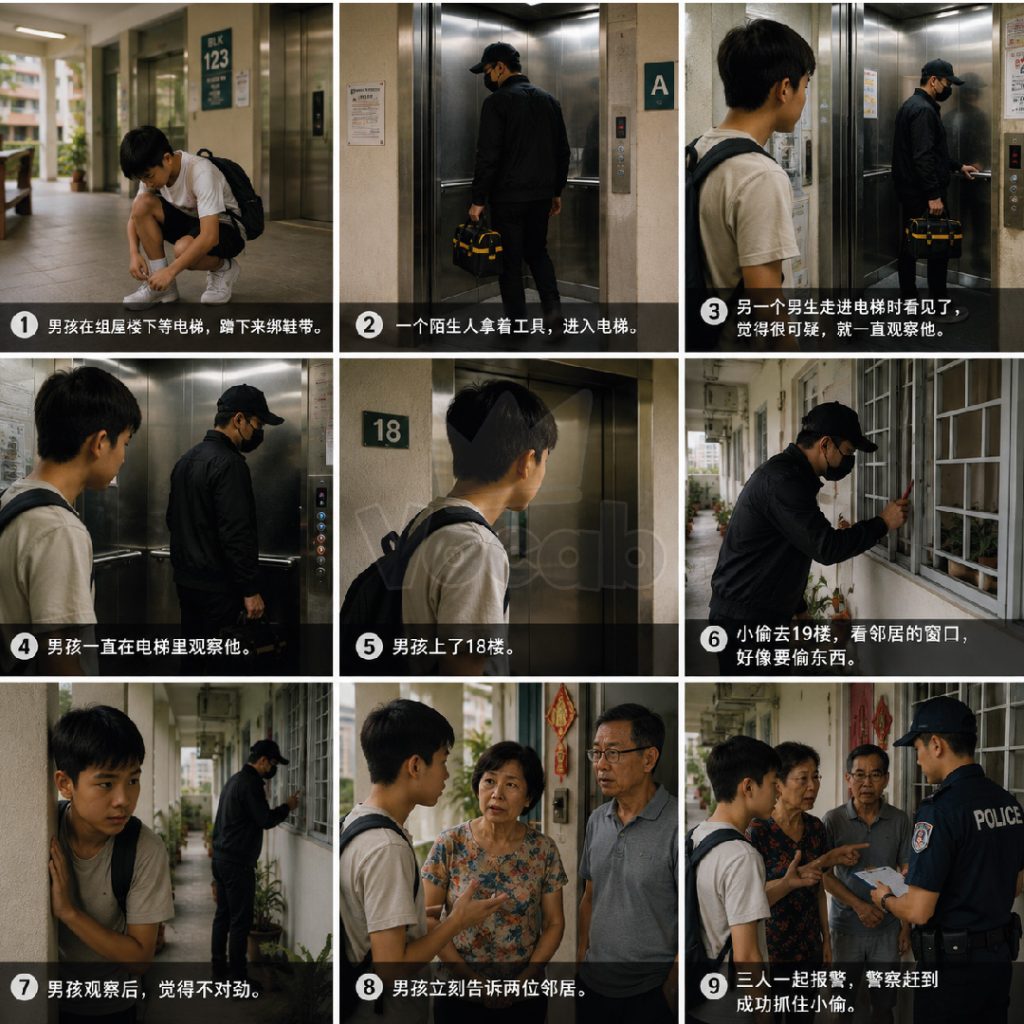
旁白:虽然我们年纪小,但也可以为住宅安全尽一份力。
问题:
1. 如果你是录像中的男生,和坏人在电梯里,你会有什么感受?
2. 你会和录像中的男孩一样和陌生人一起乘坐电梯吗?
3. 你会进去电梯吗?为什么?如果已经在电梯里,你会不会拿出手机找人帮忙
4. 如果有坏人在你的朋友家门外,你会建议你的朋友怎么做?
5. 如果你发现你讨厌的邻居家外有坏人,你会怎么做?
6. 你在家要怎么保证自己的住家安全?
7. 你认为我们应该跟邻居保持什么样的关系?
8. 如果全家出去旅游,你要怎样确保家里安全,讲出相似的经历。
9. 你有看过坏人吗?
*Questions recalled by different students.
2026 PSLE Chinese Oral Day 2 Topic
主题:诚实、勇于承认错误
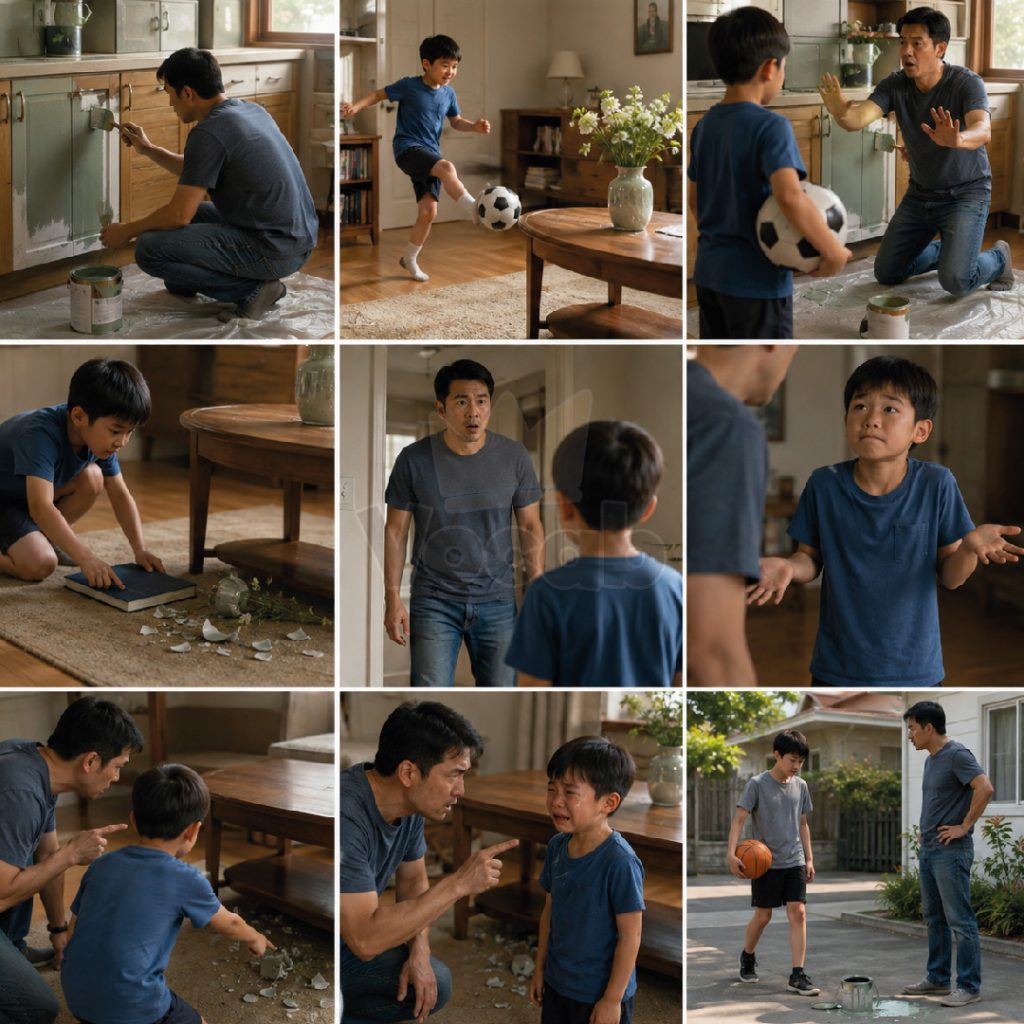
旁白:如果你做错事,你应该马上承认错误。
问题:
1. 如果你打破了花瓶,你会像录像中的男生那样做吗?
2. 如果你的朋友做出不诚实的行为,你会怎么做?
3. 你觉得你是一个诚实的孩子吗?
4.你觉得我们怎么做才能让别人更诚实?
5. 你的学校有没有举办过和”诚实”有关的活动?
Day 1 required students to assess a potentially dangerous situation and decide how to respond appropriately. Day 2 was more straightforward, focusing on honesty and admitting one’s mistakes.
Was Day 1 Really Too Difficult?
Many parents felt that Day 1 was unusually difficult. One understandable reason is that Singapore is generally safe, so most children would have little experience dealing with a suspected break-in or a suspicious person outside a neighbour’s home. If a child has never encountered such a situation, how would the child know what to say?
However, unfamiliarity was only one part of the challenge.
From a teaching perspective, students had to do three things almost at the same time:
- Observe the details and recognise that the person’s behaviour was suspicious.
- Make a sensible judgement about how the boy should respond without putting himself in danger.
- Express that judgement clearly in Chinese using relevant vocabulary and reasons.
A student may understand what is happening but lack the words to explain it. Another may know expressions such as 提高警惕、保持安全距离 and 寻求帮助, yet struggle to retrieve and organise them into a complete answer under examination pressure.
This is why Day 1 tested more than knowledge of the theme “安全”. It required students to think on the spot, make connections and respond spontaneously without depending entirely on a prepared answer.
Comparing the 2025 and 2026 PSLE Chinese Oral Topics
In our review of the 2025 PSLE Chinese Oral topics, Day 2 was generally considered more challenging; in 2026, it was Day 1.
The broad themes themselves—safety, travel, family and honesty—are not unusual. What makes a question challenging is the angle from which it is presented.
Once the angle changes, students can no longer rely entirely on a familiar model answer. They must understand the situation quickly, think on their feet and respond spontaneously using the vocabulary they already know.
An Interesting Primary 3 Textbook Connection
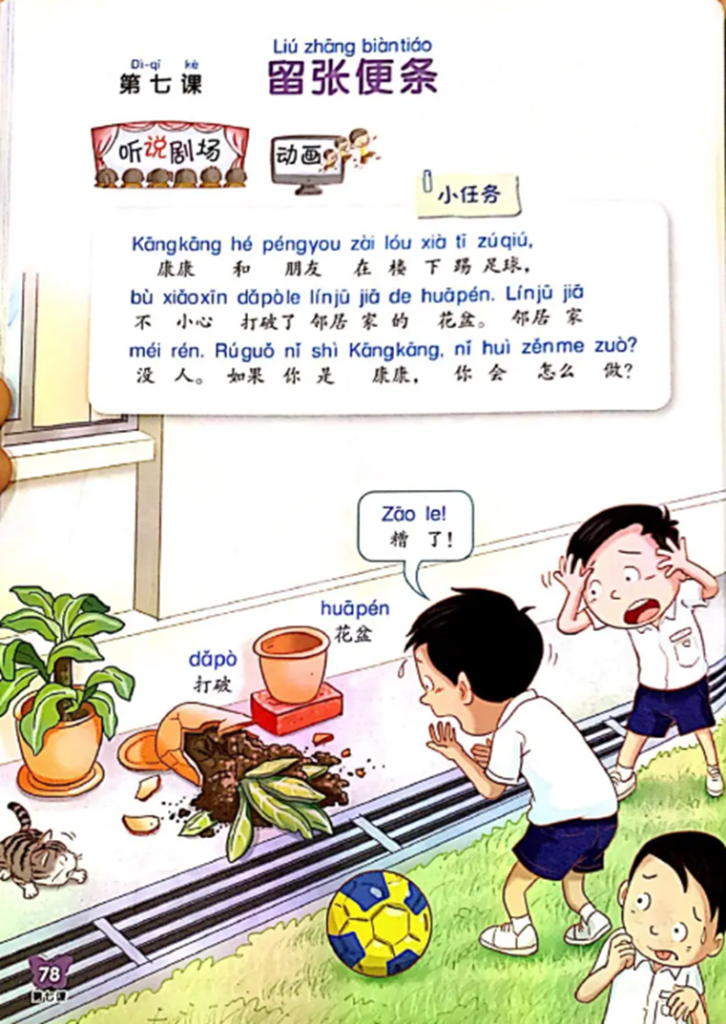
We noticed an interesting similarity between the PSLE Chinese Oral 2026 Day 2 topic and 《欢乐伙伴3A》第七课《留张便条》.
In the Primary 3 lesson, 康康 and his friends accidentally break a neighbour’s flowerpot while playing football. Students are asked what 康康 should do when the neighbour is not at home.
The situation is not identical to the PSLE video, but both involve breaking something while playing football and deciding how to respond after making a mistake.
This is why we consistently emphasise textbook vocabulary revision. Words learned in earlier years—such as 诚实、认错、道歉 and 负责任—may remain useful in Primary 6. Students need to revisit these words regularly so that they can recognise, retrieve and use them when needed.
The Goal Is Not to Spot the Exact Topic
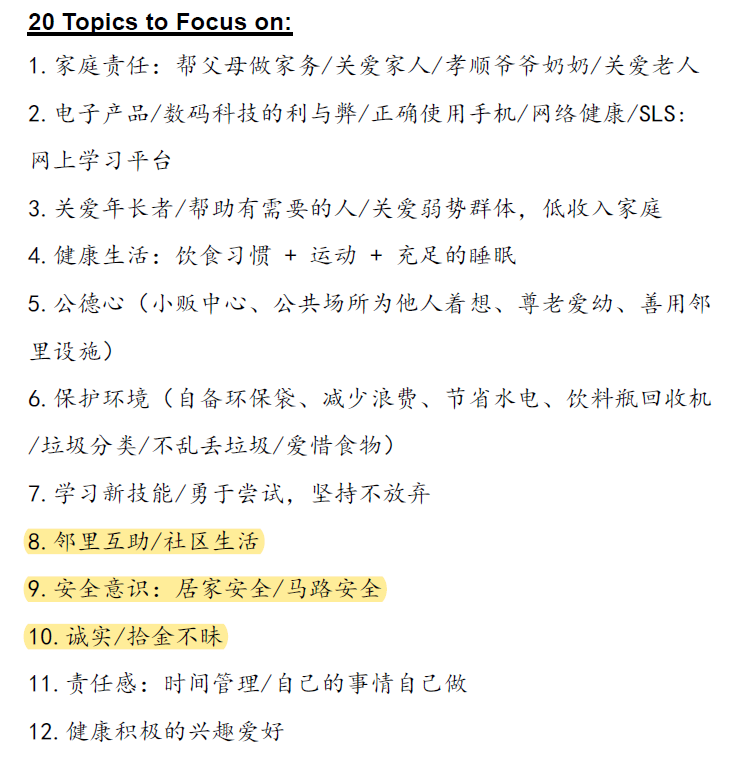
Before the examination, we shared a final revision resource covering 20 Oral themes centred around six core values (六大价值观). The list included areas related to honesty, responsibility, safety and caring for the community.
The intention was not to suggest that we could predict the PSLE topic. No teacher or learning platform can guarantee what will be tested. The purpose was to help students revise broadly: useful vocabulary, everyday situations, personal experiences, reasons and consequences, and what students, parents, schools or the community could do.
Spotting topics can be useful as the final layer of revision, but it should not be the foundation. Even if the general theme is correct, the video or question may present it from an unexpected angle.
The real achievement is not being able to say, ‘We practised the exact topic.’ It is being able to understand and respond even when the exact topic was never practised.
The aim of Oral preparation is therefore not to remove every surprise, but to help students respond even when they are surprised.
If Your Child Is Taking PSLE Next Year, Start Here
Every year, many parents begin to feel the urgency only after the Prelims or during the final one or two weeks before PSLE Oral. The child is then expected to cover many predicted topics and memorise several model answers in a short time.
It is understandable: spotting topics feels concrete and immediate. But when a question comes from an unfamiliar angle, a child who rarely practises speaking may become nervous, struggle to retrieve words or simply go blank.
There is no need to begin with intensive PSLE drills. Start with four manageable habits:
- Revisit earlier vocabulary. Choose a few useful words each week and ask your child to use them in a sentence or short conversation.
- Practise one theme from different angles. For 安全, discuss road safety, being home alone, suspicious behaviour in the neighbourhood and how neighbours can help one another.
- Go beyond the first answer. Ask 为什么?会有什么后果?如果是你,你会怎么做? A reason and a relevant example can turn a basic response into a meaningful one.
- Speak aloud regularly. Use an everyday incident, a short video or an age-appropriate news story. Ask the child what happened, what they think and what should be done.
Some of our parents simply discuss the Oral themes with their children as part of their everyday conversations—during a car ride, over dinner or after watching something together. It does not have to feel like a formal Oral lesson. The aim is to give the child more opportunities to think, respond and express an opinion naturally in Chinese.|
Even 15 to 20 minutes of regular practice is more meaningful than reading several model answers silently shortly before the examination.
Why Oral Is Worth Preparing for Early
According to the official SEAB PSLE Chinese Language syllabus, Oral carries 50 marks and accounts for 25% of the overall Chinese result: 朗读篇章 (20 marks) and 会话 (30 marks).
Oral is not automatically easy, but its skills are observable and trainable. Students can gradually improve how clearly they read, how completely they express an opinion, how they explain a reason and how they respond when the examiner asks a follow-up question.
VocabKing provides a wide range of Oral themes, vocabulary activities and speaking practice. Students can revisit vocabulary from earlier levels and practise applying it across different situations instead of depending on one memorised script.
Start your free 7-day VocabKing trial and help your child build stronger vocabulary and speaking confidence before Primary 6.
Frequently Asked Questions
What were the 2026 PSLE Chinese Oral topics?
Based on students’ recollections, Day 1 focused on 住家安全、邻里互助, while Day 2 focused on 诚实、勇于承认错误.
Is memorising model answers enough?
No. Model answers can provide useful vocabulary and structure, but students must also learn to understand unexpected questions, form their own views and adapt what they know.
How should P3–P5 parents begin preparing?
Start by revisiting earlier vocabulary, discussing one theme from different angles, asking for reasons and examples, and giving the child regular opportunities to speak Chinese aloud.
A Final Note to Our 2026 P6 Students
If your Oral examination did not go as well as you hoped, it is okay. The paper is over, and replaying every answer will not change the result.
Focus on the remaining papers. For Paper 2, revise your vocabulary, read every question and option carefully, and avoid losing marks through careless mistakes. Continue preparing steadily for Listening Comprehension and your other subjects.
There are still many marks ahead of you. Stay focused, keep going and do your best. 加油!
Read our analysis of the [2025 PSLE Chinese Oral topics].
No responses yet