
The P5 Chinese EOY results are out. Maybe the score was lower than you expected.
For some parents, the drop can be especially difficult to understand:
“My child was consistently scoring 80+ in P4. How did the results drop so much in P5?”
Sometimes, the EOY results reveal more than just a mark.
They reveal gaps that may have been difficult to see when the work was easier — vocabulary that wasn’t fully retained, words the child can recognise in one context but not another, or difficulty applying what they have learned when Comprehension and Oral become more demanding.
And that leaves many parents wondering:
Is my child actually improving? And what do they really need before P6?
Should you continue with the same tuition? Add more practice? Go back and rebuild the foundation? Or focus on a specific area such as Oral or Comprehension?
Before adding more worksheets or rushing into another class, this is a good time to first understand where your child is actually struggling — and why.
With about two months before P6 begins, there is still time to work on the right gaps and help your child start P6 stronger and better prepared.
The Brutal Truth — Why Most Students Never Catch Up
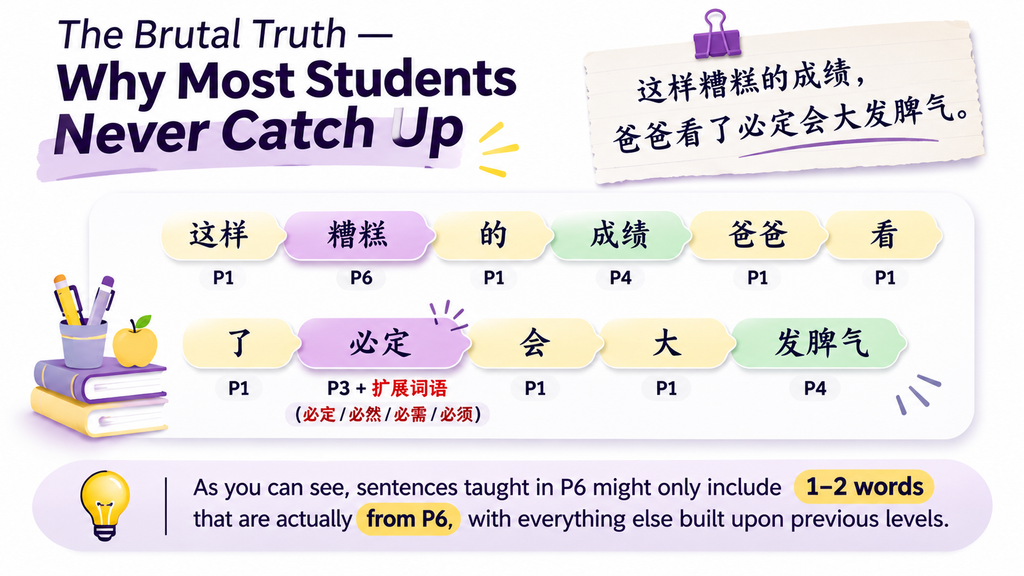
Some parents begin to notice that their child is not struggling with just one section of the paper. They are struggling to recognise or retain words they have already learned.
And once vocabulary becomes shaky, the difficulty can show up in different ways.
A child may read a Comprehension passage but not fully understand it. They may hesitate during Read Aloud because they cannot recognise certain words. During Oral, they may know what they want to say, but struggle to find the Chinese words to express it. And in Composition, they may have the ideas but lack the vocabulary to describe them clearly — resulting in simple, repetitive sentences or difficulty developing their story.
This can also explain why the jump from P4 to P5 sometimes feels so sudden.
A child who was consistently scoring 80+ in P4 may suddenly see a much bigger drop in P5 — leaving parents wondering:
“What happened? My child was doing fine before.”
The problem may not be that your child suddenly became “bad at Chinese”.
As the language becomes more demanding, vocabulary gaps that were easier to work around in earlier years can become much more visible.
And that leads to the next challenge: if the problem goes back to words learned in earlier years, how do you get your child to revise them all again?
Knowing What to Revise Is One Thing. Getting Them to Do It Is Another.
The most obvious place to revisit vocabulary is actually the simplest one: their school textbooks.
After all, these are the words your child has already been taught and is expected to know.
But for a child who already dislikes Chinese, asking them to go back through old textbooks — sometimes from several years ago — is easier said than done.
Soon, revision turns into another cycle of reminding, nagging and resistance.
And even when a child does sit down with the textbook, another question remains:
Which words do they actually need to revise?
Going through every chapter from P1 to P5 is neither realistic nor necessary. What parents really need is a way to identify the vocabulary their child has forgotten or never fully mastered — and help them revisit those words regularly enough to retain them.
The goal for the holidays isn’t to make children study Chinese for hours.
It’s to make the 15–20 minutes they are willing to spend on Chinese actually count.
A 2019 study by NIE found that Singaporean students lose an average of 2.5 weeks of academic progress during the school holidays. Other studies show a loss of one to three months in reading and math skills. Weaker students forget even more.
When January arrives, teachers have just nine months before PSLE and must move quickly. Weaker students struggle almost immediately and the gap becomes visible by the first WA. By the time parents learn why their children are struggling, catching up becomes stressful instead of strategic.
More Practice Isn’t Always the Answer — First Find the Gap
By P5, many children are already doing a lot.
They have school worksheets. Assessment books. Past Year Papers (PYP). Some attend tuition every week, while others join workshops or holiday intensive classes. Parents may even print extra papers or buy more practice materials after seeing the EOY results.
These can help stronger students, but they don’t repair a weak foundation. Scoring 45 to 65 marks usually means P1–P4 vocabulary was never fully built. That is why explanations feel too fast and too complex.
Parents also told us their kids feel embarrassed in group classes, find home tuition ineffective, or struggle to understand teachers who use complicated explanations. Tuition becomes more tiring than helpful. Case in point:
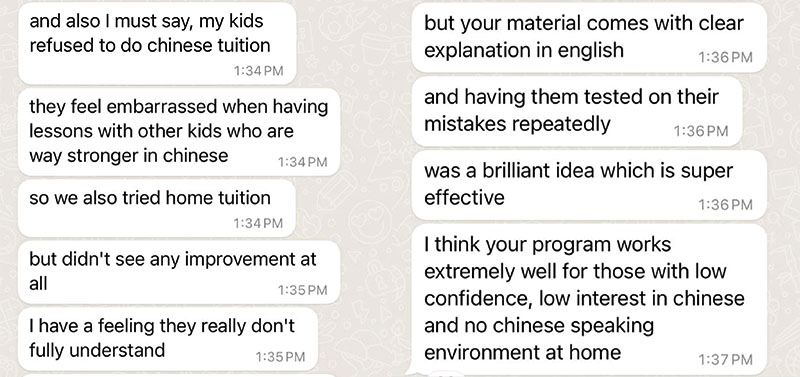
The Starting Point That Shocks Parents (But Works)
Some parents say, “My child is weak and cannot remember the Chinese words, how ah?”
Consider starting lower, not to make them feel small, but to rebuild fluency and confidence.
Suggested starting levels
- Below 50 marks → P1
- 50–65 marks → P2
- 65–75 marks → P3
It surprises parents at first, then it surprises them when it works. As a matter of fact, analysis of PSLE papers shows that 90 percent of the vocabulary actually comes from P1–P5. In this case, P6 is not the real barrier. Earlier levels are.
The Foundation Reset Formula
Here is the structure that helped many P5 students turn things around:
Weeks 1–2
- Diagnostic review
- P1–P2 sprint
- 30 minutes daily with mastery mode
Weeks 3–4
- P3 high-frequency words
- Sentence building
Weeks 5–6
- P4–P5 consolidation
- Simple comprehension to build reading stamina
This approach doesn’t only fix vocabulary. It restores confidence and curiosity. Once students feel they can understand lighter words again, Chinese stops feeling like a wall.
Two Paths in December
Path 1: Do nothing
Most learning fades. January becomes a struggle. Confidence drops, and recovery becomes harder.
Path 2: Strategic rebuild
Works for every profile:
- Failing → rebuild foundation
- AL5–AL6 → aim for 1–2 AL jump
- AL3–AL4 → sharpen oral and vocabulary
- High achievers → pull ahead before P6 rush begins
Every child can benefit — different pace, same outcome: stronger foundation.
Do not waste time. November and December are the BEST and ONLY months where the foundation can still be rebuilt in peace. When P6 begins, time shrinks and pressure rises. Rest is important, but sacrificing PSLE readiness for comfort is a dangerous trade.
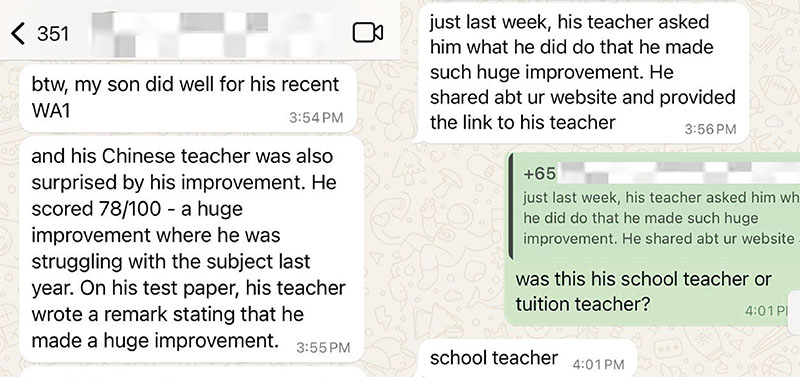
One P6 student who joined last November improved to 78/100 within months. His teacher was so surprised she asked how it happened. He simply shared the link.
Real Data: Action vs Inaction
From 50 students we observed:
- Consistent holiday practice → +20 to +30 marks
- No practice → –10 to –15 marks
That creates a difference of 40 to 45 marks.
Many parents have told us their children dislike Chinese or cannot focus. They said assessment books felt useless.
That’s why, instead of forcing long study blocks, we rely on Mastery Mode, simple games, and instant corrections. Kids learn in short bursts and stay motivated because they see improvement. Parents can monitor everything.
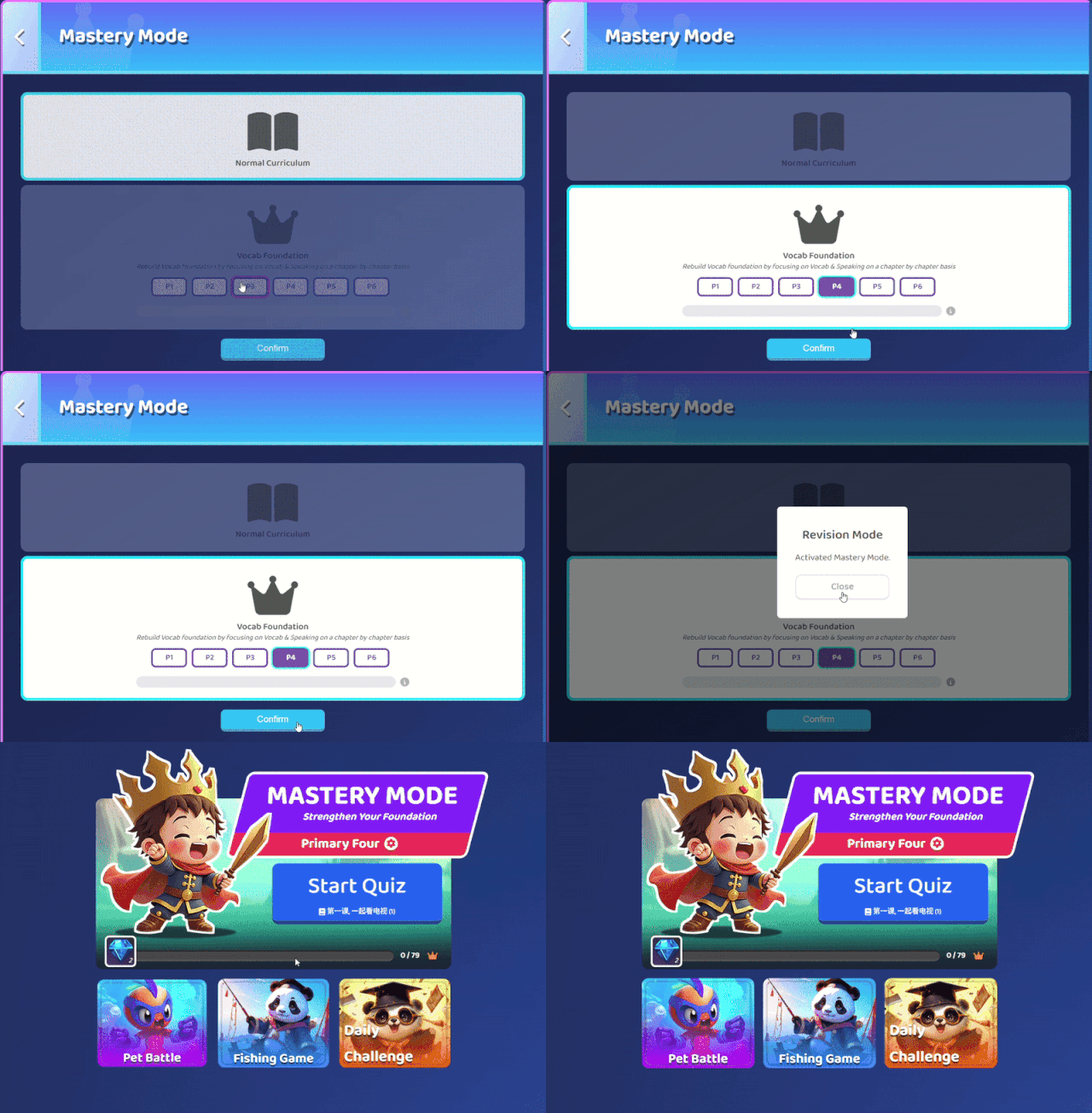
Most of all, it fits into the daily lives of ALL students: car rides, late evenings, busy weekends, overseas trips. No heavy homework. No rigid timing. Just smart use of screen time.
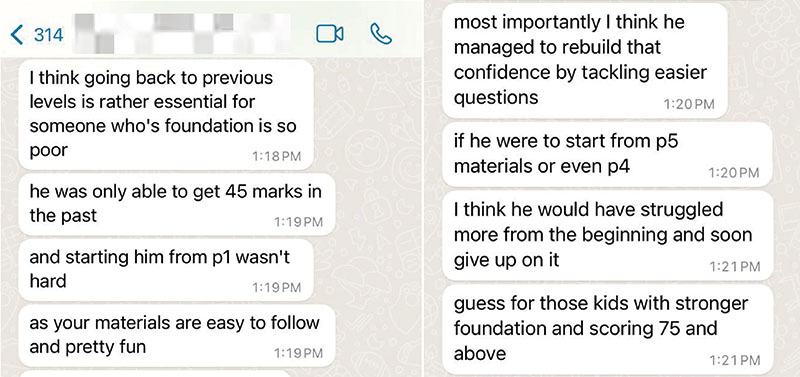
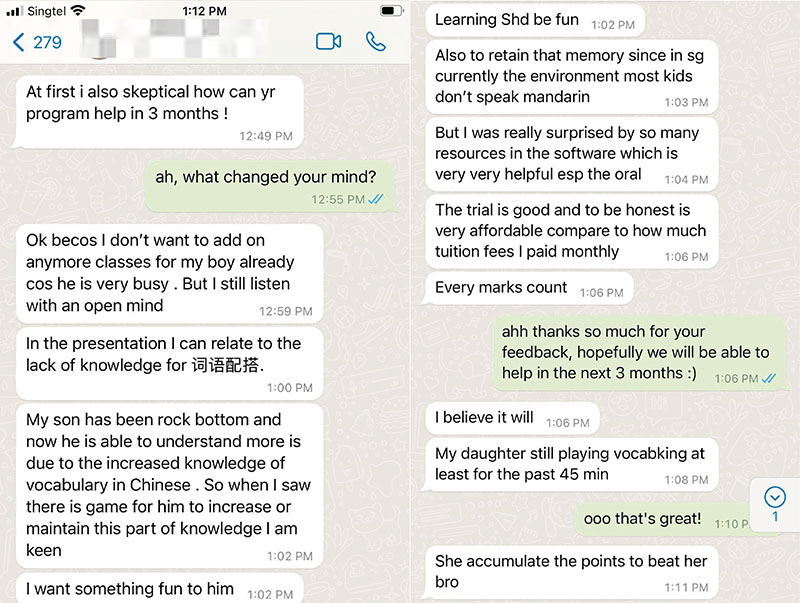
Here’s what one parent has to say about our program:
January feels very different when your child begins P6 prepared instead of panicking.
Whether your child failed P5, scored 50 to 65, wants an AL improvement, or is aiming for AL1/AL2, November to December is the most important period of the whole PSLE journey. Progress comes faster, pressure is lower, and habits are easier to build.
The Good News — Failure Doesn’t End the Story
A student had been stuck at 46 to 51 marks across P5 and P6. AL6. Group tuition made him feel embarrassed, home tutoring didn’t help, and his parents even admitted, “We only expected him to get 45 to be honest.”
He started using VocabKing and began from P1 words again. No tuition, no special classes. Just a clear reset. In four months, everything shifted.
- Improved 20 marks
- From AL6 to AL5 in Prelim
- Confidence returned
- Scored AL4 in PSLE, his so-called worst subject
- Chinese ended up boosting his overall PSLE score
According to his mum, “Starting from P1 wasn’t hard — your program is easy to follow and fun. We never expected AL4. Chinese ended up helping his PSLE the most. Thank you so much.” Real improvement came not from harder work but from fixing what was missing at the start.
The past does not decide their PSLE. But the next six weeks might. You want a structured way to rebuild the foundation and confidence?
Try the VocabKing Foundation Reset Program — 7-day free trial: https://learn.vocabking.com.sg/login or WhatsApp us at +65 8064 8461 for more info.
Let your child experience progress first. You’ll see the difference quickly.
Coming Up Next: The Oral Emergency
The section where students silently lose 10–15 marks. Yet some managed to score 45/50 and 48/50. A few even got full marks for Read Aloud. They didn’t become gifted overnight. Instead, they practised daily read-aloud, high-frequency vocabulary, and received instant AI feedback.
Read Aloud is the fastest way to boost AL. Sometimes it’s the section that rescues the entire PSLE score.
Six weeks. One window. Use it before it closes.
No responses yet